Model comparison

Explorer or Coastal. One platform, two ways to live with it.

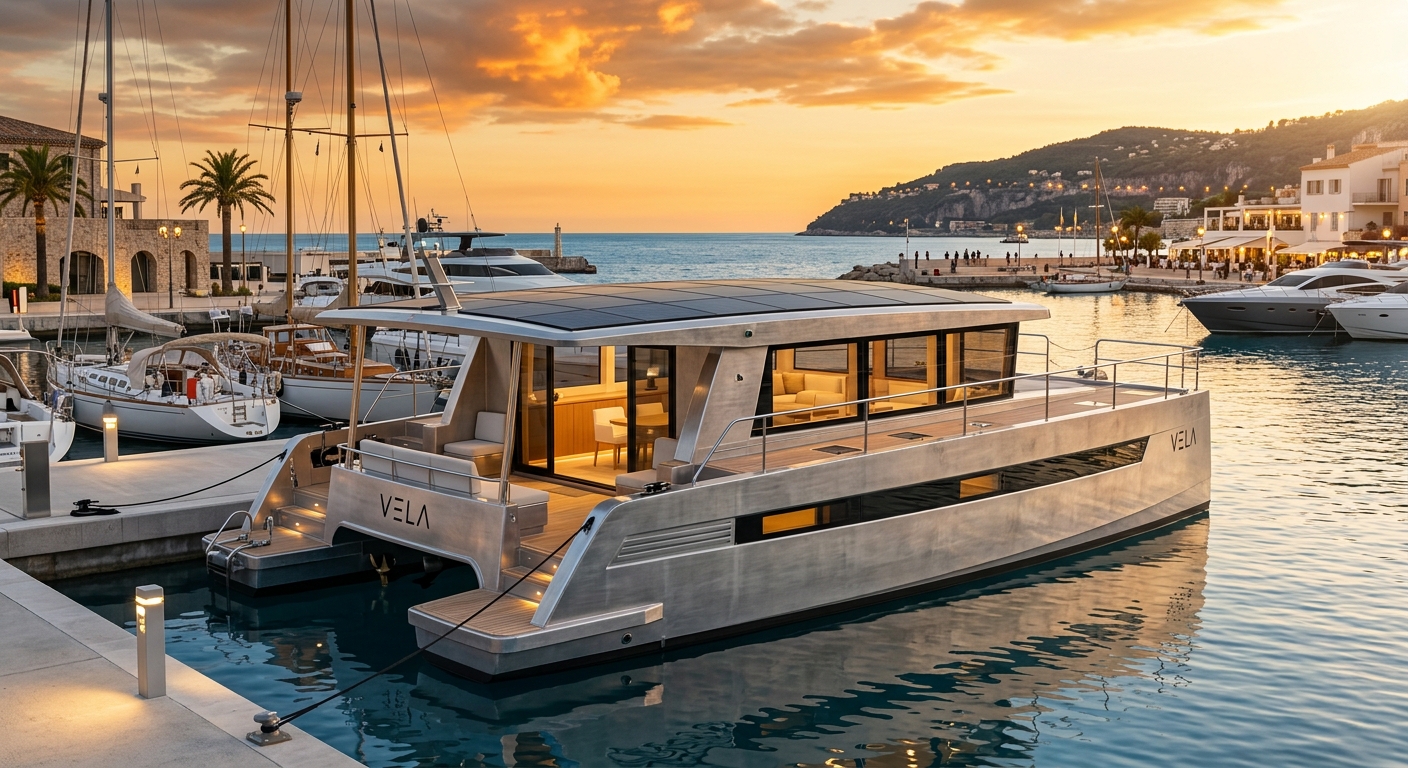
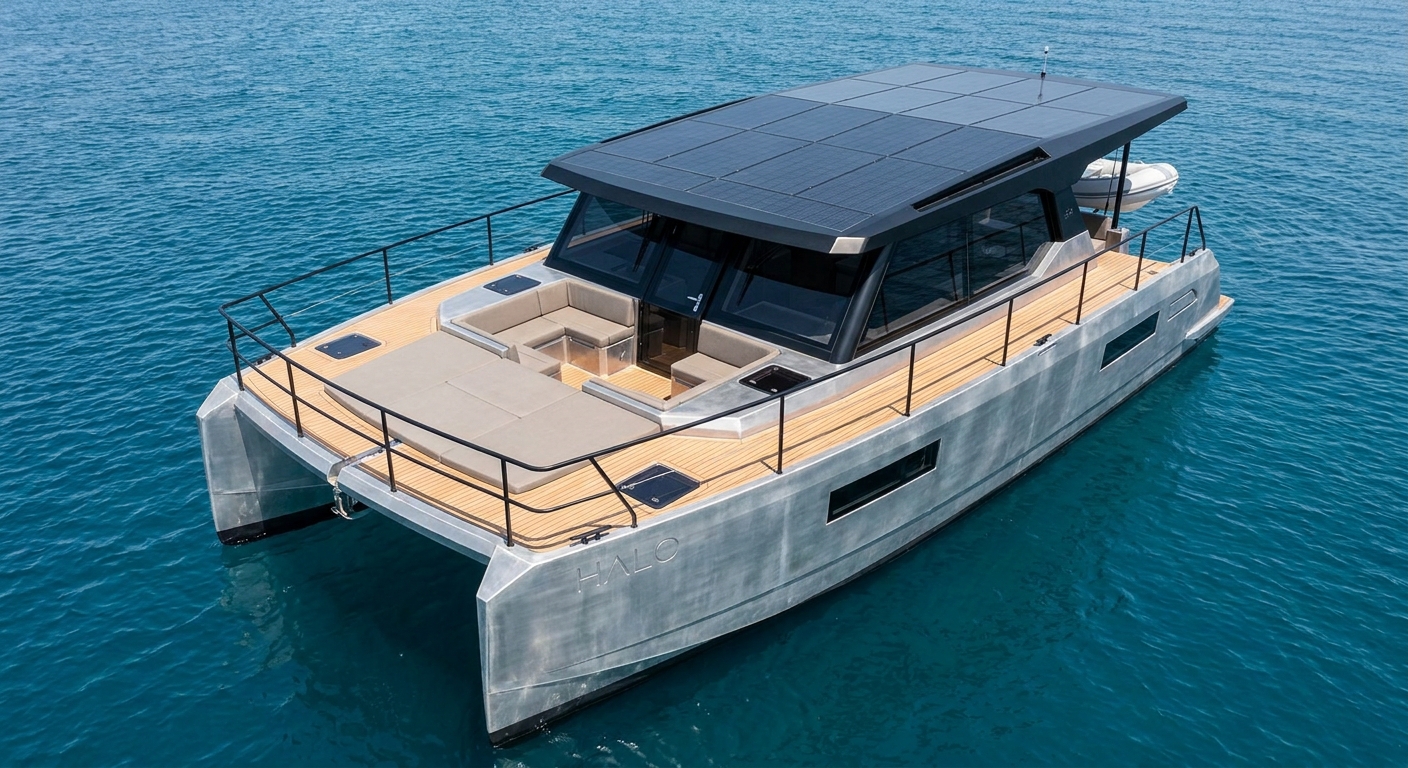
Both editions share the same aluminium hull platform, 96 V ePropulsion drivetrain and ~38 m² solar hardtop, and both are quiet, simple and ocean capable. Displacement, capacity and cruise performance are where they diverge.

Positioning

Two very different owners.

Halo Model A — Explorer Edition

Model A — Explorer Edition

The long-range solar machine.

Fewer guests means a lighter displacement — 7,270 kg deployed. That is what lets the Explorer hold a 5.0-knot solar cruising design target on standard solar power alone through daylight hours, then continue overnight at 3.8 knots on the bank or 4.5+ knots under kite with net battery generation.

Full technical specification
Halo Model B — Coastal Edition

Model B — Coastal Edition

A high-yield charter platform.

Even loaded to full charter capacity — 8 guests, 2 professional crew and heavy luggage at 8,335 kg — the Coastal still holds a 4.5-knot solar cruise in daylight, with a 3.5-knot overnight reserve and 4.4+ knots under kite. Simple, bulletproof systems for bareboat or skippered operation. CE Category A is a design category, not a passenger certificate: commercial coding and manning sit with the operator and flag state.

Full technical specification

Master specification

Explorer vs Coastal, line by line.

Indicative figures for the base build, with the long-range battery option shown where it changes the numbers.

Primary target market

Explorer: Private couples & blue-water cruisers

Coastal: Luxury charter operations & vacation fleets

Standard passenger capacity

Explorer: 4 private guests (short-handed setup)

Coastal: 8 charter guests + 2 professional crew

Base configuration deployed weight

Explorer: 7,270 kg (ultra-lightweight footprint)

Coastal: 8,335 kg (full payload outfitting)

Standard energy storage

Explorer: 47.0 kWh (2 × 23.5 kWh, one block per hull)

Coastal: 47.0 kWh (2 × 23.5 kWh, one block per hull)

Long-range battery upgrade

Explorer: 94.0 kWh via +2 × 23.5 kWh (Off-Grid Endurance Pack)

Coastal: 94.0 kWh via +2 × 23.5 kWh (equipment pack option)

Long-range option weight impact

Explorer: 7,470 kg operational mass

Coastal: 8,535 kg operational mass

Base solar cruise speed (design target)

Explorer: 5.0 kts (pure daylight equilibrium)

Coastal: 4.5 kts (pure daylight equilibrium)

Upgraded solar cruise speed (design target)

Explorer: 4.9 kts (minor extra mass)

Coastal: 4.4 kts (minor extra mass)

Overnight safe speed (battery only)

Explorer: 3.8 kts sustained for 12 hours

Coastal: 3.5 kts sustained for 12 hours

Overnight safe speed (kite assisted)

Explorer: 4.5+ kts with net battery generation

Coastal: 4.4+ kts with net battery generation

Battery-only range (no solar, no kite)

Explorer: ~55 – 65 nm at 5.0 kts · ~30 – 35 nm at 6.5 kts

Coastal: ~55 – 65 nm at 4.5 kts · ~30 – 35 nm at 6.5 kts

Battery-only range with 94.0 kWh upgrade

Explorer: ~110 – 125 nm at 5.0 kts

Coastal: ~110 – 125 nm at 4.5 kts

Meaningful hydro-regeneration

Explorer: Above ~6 kts under kite (~1.1 kW twin pods)

Coastal: Above ~6 kts under kite (~1.1 kW twin pods)

Fresh water utility tankage

Explorer: 400 L symmetrical (2 × 200 L tanks)

Coastal: 400 L symmetrical (2 × 200 L tanks)

Specified toys & tender platform

Explorer: True Kit 400 + ePropulsion Spirit 2.0

Coastal: True Kit 400 + ePropulsion Spirit 2.0
The long-range battery as a performance cushion

The 94.0 kWh upgrade adds one further 23.5 kWh block per hull (ePropulsion requires added batteries to match the installed model), supplied within an equipment pack rather than as a standalone option. The extra ~200 kg trims daytime equilibrium speed by only 0.1 knot, while adding substantial reserve for high-speed bursts and heavy overnight house loads such as cabin air conditioning.